If you wear dentures, you probably know the routine all too well. You apply the adhesive, hope it holds through lunch, and quietly skip the steak, the corn on the cob, or the crusty bread you used to love. Maybe your dentures shift when you talk, rub sore spots into your gums, or simply never feel quite right no matter how many adjustments you get. For many people, these daily frustrations slowly shrink the list of foods they enjoy and chip away at their confidence.
The good news is that you don’t have to settle for a smile that moves around. Implant-supported dentures offer a more stable, more comfortable, and longer-lasting way to replace a full arch of teeth. By anchoring your denture to dental implants placed in your jawbone, we can give you a secure bite that stays put, so you can get back to eating, speaking, and smiling without second-guessing.
At Advanced Periodontics in Monroe, Dr. Amato and our team help patients throughout Fairfield County explore whether implant-supported dentures are the right fit. In this post, we’ll walk you through how they work, why they protect your long-term oral health, how we decide how many implants you need, and what to expect when you come in for a consultation.
What Are Implant-Supported Dentures?
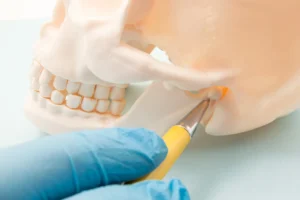
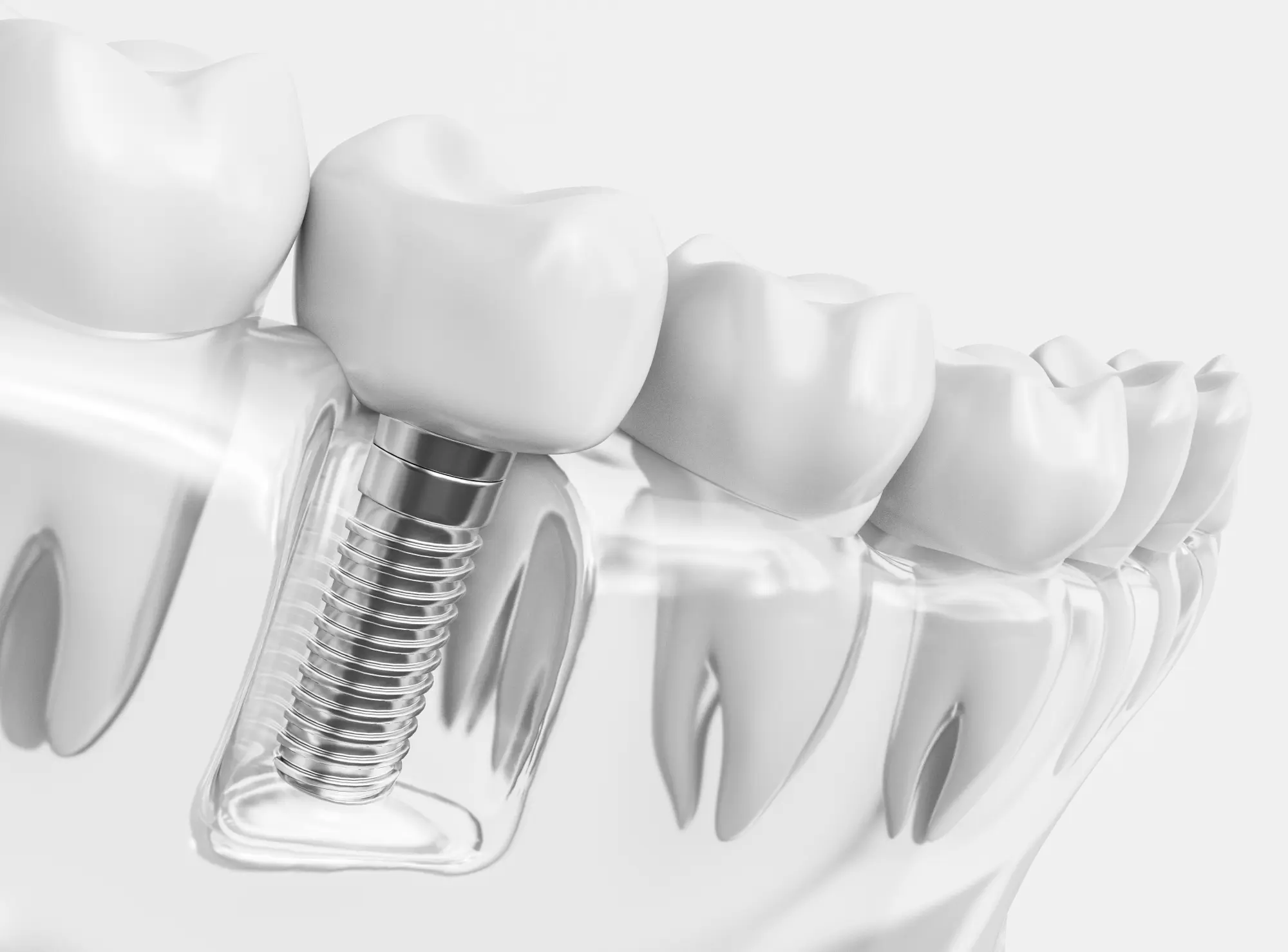
Implant-supported dentures combine two proven treatments: dental implants and a full-arch denture. Instead of resting on top of your gums and relying on suction or adhesive, your denture attaches directly to implants that are anchored in your jawbone.
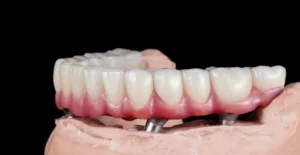
Here’s how it works. First, we place small implant posts into the jaw. Over time, these posts fuse with the surrounding bone and become a sturdy foundation, much like the roots of natural teeth. Once the implants are ready, your denture snaps securely into place on top of them. The implants hold the denture firmly, so it no longer slides, tips, or lifts when you bite down.
This is a very different experience from a traditional denture. A conventional denture sits on the soft tissue of your gums, which naturally changes shape over the years. That’s why so many denture wearers find their fit loosening over time. With implant-supported dentures, the stability comes from the bone itself, not from adhesive or a perfect seal against your gums.
Why Stability Changes Everything
The biggest difference our patients notice with implant-supported dentures is simple: there’s no more movement. Once your denture is anchored to implants, it stays exactly where it belongs, whether you’re chatting with friends, laughing at the dinner table, or biting into something crunchy.
That stability brings a number of everyday benefits:
- No more slipping or shifting. Your denture stays locked in place, so you don’t have to worry about it moving while you eat or speak.
- No food trapped underneath. Loose dentures often let small bits of food slip beneath them, which can be uncomfortable and irritating. A securely anchored denture greatly reduces that problem.
- A solid, reliable bite. With implants providing support, you have a firm chewing surface and a much more stable bite.
- More freedom at mealtime. Many patients find they can enjoy foods they had given up on, from fresh apples and salads to a good steak.
For a lot of people, that last point is what matters most. Food is a big part of how we connect with family and friends, and being limited in what you can eat affects more than nutrition. Implant-supported dentures help you return to the foods you love, comfortably and confidently.
Protecting Your Jawbone for the Long Haul
One of the most important benefits of dental implants is one you can’t see right away: they help stimulate and preserve your jawbone.
When a tooth is extracted, the bone that once supported its root no longer receives the stimulation it needs. Over time, that area of the jaw typically begins to shrink. This bone loss is one reason traditional dentures tend to loosen as the years go by, and it can also contribute to a sunken look around the mouth and cheeks.
Dental implants change that. Because implants are anchored in the jawbone, the everyday forces of chewing are transferred into the bone, much like natural tooth roots. That stimulation helps the bone stay in place. Healthy, preserved bone supports not only the implants themselves, but also your gum tissue and the denture, along with the space beneath it.
As a periodontal practice, preserving the health of the bone and gums is at the heart of what we do. Implant-supported dentures aren’t just about how your smile looks and feels today. They’re about protecting the foundation of your oral health for years to come.
How Many Implants Do You Need?
This is one of the most common questions we hear, and the honest answer is that it depends on you. To support a full arch of teeth, we may use anywhere from two to eight implants. The right number isn’t a one-size-fits-all formula. It’s determined by what will work best for each individual patient.
When Dr. Amato evaluates your case, we look closely at several factors, including:
- Bone density and quantity. How much healthy bone you have, and how dense it is, plays a major role in where implants can be placed and how many are needed.
- Chewing capability. Your bite and the forces you place on your teeth help shape how much support your denture requires.
- Your build. Larger and smaller patients can have different needs when it comes to supporting a full arch.
- Your expectations. What you want from your new smile matters. Some patients prioritize maximum stability, while others have different goals in mind.
By weighing all of these factors together, we can design a treatment plan that’s tailored to you. That personal approach is what helps your implant-supported denture feel comfortable, function well, and last.
Doing It Right the First Time: Cost, Quality, and Maintenance
It’s natural to think about cost when you’re considering implant-supported dentures. But we encourage patients to look beyond the price tag alone. What matters most is getting the treatment done right, getting it done the first time, and getting it done the way it should be. A carefully planned and skillfully placed implant restoration is an investment that pays off in comfort, function, and longevity.
Just as important is what happens after your treatment is complete. Like natural teeth, implant-supported dentures need consistent care to stay healthy. Maintenance includes:
- Daily cleaning at home. Keeping your denture and the areas around your implants clean every day helps protect your gums and the bone that supports your implants.
- Routine periodontal visits. Periodic cleanings and checkups with your periodontist allow us to monitor your implants, gums, and bite, and to catch any small issues before they become bigger ones.
With good home care and regular professional checkups, your implant-supported denture can continue working smoothly for many years. This is a long-term solution, not a quick fix, and we’re here to partner with you every step of the way.
What to Expect at Your Consultation
If you’re curious about implant-supported dentures, the best first step is a consultation at our Monroe office. This visit is relaxed and informative, with no pressure. It’s simply a chance for us to get to know you and for you to get to know us.
During your consultation, Dr. Amato and our team will:
- Learn about your goals. We’ll talk about what’s bothering you about your current dentures or missing teeth, and what you’d like your new smile to do for you.
- Review your radiographs. X-rays help us evaluate your bone and determine what treatment options are realistic for you.
- Go over your medical history. Your overall health plays a role in planning safe, successful implant treatment.
- Discuss your options. We’ll walk you through the choices you have going forward and answer your questions along the way.
- Put together a plan. Together, we’ll map out an approach that makes sense for your needs, your expectations, and your lifestyle.
Our goal is to give you the information you need to make a confident decision, and to make sure that whatever path you choose, it’s done correctly.
Explore Implant-Supported Dentures in Fairfield County
Living with loose, uncomfortable dentures doesn’t have to be your normal. Implant-supported dentures can give you a secure, stable bite, help preserve your jawbone, and open the door to enjoying the foods you love again. Because every patient is different, the right plan starts with a careful evaluation and an honest conversation about your goals.
If you live in Monroe or anywhere in the Fairfield County, Connecticut area, we’d love to meet you. Dr. Amato and the team at Advanced Periodontics are here to review your options and help you find a long-term solution that fits your life. Call us today at (203) 268-2000 to schedule your consultation.
Frequently Asked Questions
Q: What are implant supported dentures?
A: Implant-supported dentures are a full arch of replacement teeth that lock onto titanium implant posts placed surgically below your gum line, rather than resting loose on your gums. Because those posts take over the job of natural tooth roots, the denture stays secure while you eat and talk, and it’s built to mesh with your gum line so it reads as your own smile.
Q: What is the difference between traditional dentures and implant-supported dentures?
A: Traditional removable dentures sit on top of the gums and depend on adhesive gels to stay there, which is where the familiar frustrations come from: slipping, difficulty eating, trouble speaking, and a fit that never feels quite right. Implants are titanium posts anchored beneath the gum line, so a denture attached to them locks into place instead of shifting, and because the posts stimulate the jaw bone the way real roots do, they help you avoid the sunken-in facial appearance that comes with bone deterioration.
Q: How much are implant supported dentures?
A: Cost comes down to your specific case, including whether you’re replacing an upper arch, a lower arch, or both, and what your treatment plan calls for. We take cash, checks, and major credit cards, offer zero- to low-interest financing through CareCredit and Lending Club, and will do everything we can to work with your dental insurance. The only way to get a figure that reflects your actual situation is to sit down with Dr. Amato for a consultation.